

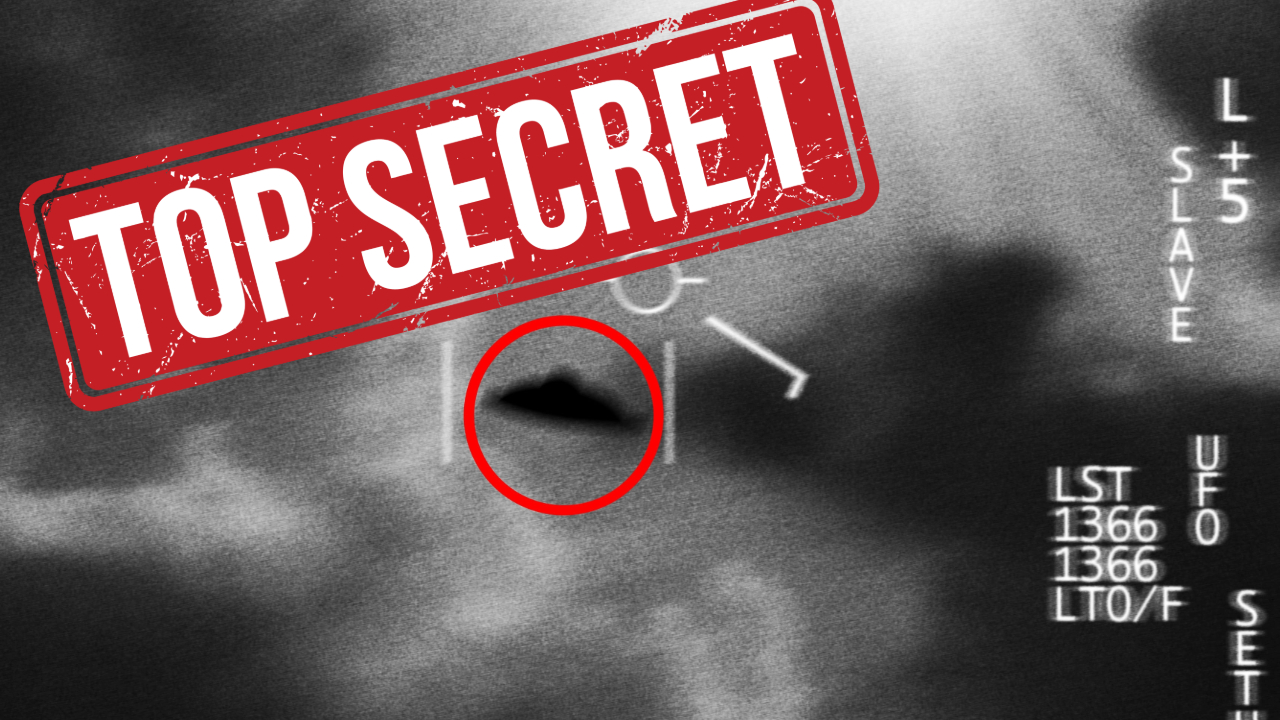
UFO Hearings: The Truth About Aliens—Are They Real?
In July 2023, David Grusch testified under oath in the U.S. Congress. He claimed that the U.S. government has been involved for decades in the recovery of remains of non-human objects, including “intact ships” and “non-human biological remains.” These shocking statements brought back to the table the importance of research on the UFO phenomenon, but precisely what is a UFO?
What is a UFO?
The term UFO, an acronym for Unidentified Flying Object, refers to any aerial phenomenon that qualified observers or technological systems cannot immediately identify.
Outside the scientific field, the term UFO has acquired popular connotations that associate these objects with extraterrestrial technology.
This perception has been fostered by media representations, personal stories, and conspiracy theories linking UFOs to alien life. In popular culture, the image of a UFO often evokes flying saucers, lights in the sky, or advanced spacecraft that defy the known laws of physics.
In the scientific field, however, this term does not imply the existence of extraterrestrials but rather describes an event or object whose nature or provenance requires further analysis. For researchers, a UFO is essentially a classification problem: a phenomenon for which there is no known explanation but which could have a mundane solution upon detailed investigation.
However, the recent change in official terminology to “Unidentified Aerial Phenomena” (UAP) seeks to eliminate the bias associated with the word “UFO” and highlights the importance of studying these phenomena from a rigorous scientific perspective.
This has opened the door to more serious research and has generated a renewed interest in understanding what happens in the heavens.
The debate around UFOs reveals a tension between the scientific and the popular. While science seeks objective and verifiable explanations, the public fascination with the unknown fuels speculative narratives.
UFO sightings
UFO sightings have been reported worldwide, from mysterious lights to unusually shaped objects that defy conventional explanations.
According to the scientific community, the vast majority of these reports can be attributed to natural phenomena, human technology, or errors of perception.
For example, meteors, unusual clouds, drones, and military experiments. In addition, cognitive bias, such as pareidolia, where people see familiar patterns in vague stimuli, can influence the interpretation of an event.
However, the personal experiences of those who claim to have seen a UFO often describe characteristics that defy these explanations.
Many witnesses recount aerial movements that seem impossible under the known laws of physics. For some, these experiences are so vivid and perplexing that conventional explanations fail to satisfy them.
Conversely, technological advances have made it possible to capture more detailed sightings. Videos recorded by military pilots, such as the famous Pentagon cases, have shown objects that appear to move inexplicably.
Documented UFO sightings that still have no explanation:
- The Rendlesham Forest UFO Incident (1980)
This event, also known as the “British Roswell,” occurred near two U.S. Air Force military bases in Suffolk, England.
Military personnel reported seeing strange lights in the forest for three consecutive nights. Some witnesses reported approaching a metal triangular object that emitted a bright light and appeared to float at a low altitude.
Lieutenant Colonel Charles Halt recorded audio while investigating the phenomenon. In it, he describes lights moving at high speed and an object that projected beams of light onto the military base.
The official report of the incident, known as the “Halt Mem,” documented these events, and witnesses and many researchers have not considered the explanations offered by the scientific community satisfactory.
- The USS Nimitz’s encounter with a “Tic Tac” (2004)
In November 2004, U.S. Navy pilots assigned to the aircraft carrier USS Nimitz encountered a flying object described as a “Tic Tac” due to its elongated shape.
This object was detected by radar and sighted visually by pilots. According to Commander David Fravor, one of the main witnesses, the object performed maneuvers that defied the known laws of physics, such as instantaneous changes of direction and extreme accelerations with no signs of conventional propulsion.
The incident was captured on video by infrared sensors and officially declassified by the Pentagon in 2020. Despite the investigations, no definitive explanation has been provided for the unusual features observed in the object.
- The Phoenix UFO Case (1997)
On March 13, 1997, thousands of people in Arizona, Nevada, and northern Mexico reported seeing a formation of lights in the night sky. The lights were described as a vast V-shaped object moving slowly and silently. Hundreds of witnesses witnessed the main event, which was recorded in photographs and videos.
Although the Air Force explained part of the phenomenon as flares launched during a military exercise, this explanation did not satisfy many witnesses, who insisted that the object appeared solid, blocked stars in its path, and had colossal dimensions. To this day, this event remains one of the most intriguing and debated mass sightings.
- The Japan Airlines Flight 1628 Incident (1986)
On November 17, 1986, Japan Airlines Flight 1628, a freighter traveling from Paris to Tokyo, experienced an unusual encounter while over Alaska. Captain Kenju Terauchi and his crew observed bright lights that appeared to be coming from two cylindrical objects accompanying the plane. Later, a third, larger object appeared, described as massive and disk-shaped.
FAA (Federal Aviation Administration) ground radar and aircraft radar confirmed the presence of an unknown object near the plane. Despite efforts to explain the incident as a reflection or misperception, Terauchi’s detailed description and multiple radar confirmations have kept this case a mystery. The FAA admitted the existence of the radar data but offered no definitive explanation.
- The O’Hare International Airport Encounter (2006)
On November 7, 2006, United Airlines employees and witnesses observed a disc-shaped object hovering over a terminal at Chicago’s O’Hare International Airport. The object remained visible for several minutes before rapidly ascending, leaving a hole in the clouds that multiple witnesses reported.
Despite detailed reports from pilots, mechanics, and ground crew, the FAA dismissed the event as a meteorological phenomenon, prompting criticism from witnesses who insisted the object was solid and had precise movements. No radar data related to the incident was recovered, adding to the controversy over the lack of an official record. This case remains one of the most intriguing sightings in a highly controlled airspace.
Despite being well documented, these three cases remain enigmas that science has not been able to solve entirely. They are clear examples of how UFO/UFO phenomena continue to raise questions about what might be occurring in our skies.
UFO hearing congress
In recent years, the U.S. Congress has hosted several public hearings and confidential briefings related to UAPs.
This effort is linked to a growing interest in documenting unexplained sightings, particularly after the Pentagon declassified videos of encounters with unidentified aerial objects in 2020.
The first public hearing in decades took place in May 2022, when Defense Department officials discussed the work of the Office of Anomaly Resolution in All Domains (AARO). This body was created specifically to investigate UAPs from a safety and science perspective.
David Grusch’s statements to the U.S. Congress
In July 2023, during the UFO hearing Congress, David Grusch, a former U.S. intelligence officer, caused an international stir by testifying under oath before the U.S. Congress about the UFO phenomenon.
Grusch, who worked on research programs related to UAPs, claimed that the U.S. government had been involved for decades in a systematic cover-up about the recovery of “non-human technology” and associated biological remains.
According to his statements, these operations would have been kept secret even from senior government officials and legislators. Grusch stated that government investigations confirmed the existence of unexplained aerial phenomena and suggested that some of them could be linked to non-human intelligence.
Although he did not present direct evidence during his testimony, he claimed to have shared confidential information with appropriate oversight committees. He called for creating a legal framework to allow other whistleblowers to share their experiences without fear of reprisals.
Grusch’s statements are essential in several ways.
First, they have elevated the UFO debate to an unprecedented level, attracting the attention of international media, policymakers, and scientists.
Second, they have incentivized other witnesses to come forward, contributing to a larger narrative about the phenomenon.
Finally, they have generated significant pressure for U.S. authorities to be more transparent about what they know about UAPs.
While Grusch’s claims have been met with skepticism by some quarters, their impact has been undeniable. They have put the UFO phenomenon at the center of public debate and have promoted legislative initiatives to guarantee greater transparency in managing these phenomena. This marks a significant shift in how UFOs are officially addressed.
Other UFO advocates
Throughout history, important people, even those with scientific training, have been active advocates of speaking freely about the subject of the UFO.
One of them was Stanton Friedman, a nuclear physicist and one of the most recognized defenders of the extraterrestrial hypothesis in the field of UFOs. Although he had a scientific background, with work experience in nuclear energy and aeronautical projects, he dedicated much of his life to researching and reporting cases related to UFOs.
Friedman maintained that many UFO sightings were clear evidence of visits by advanced extraterrestrial civilizations. His position was based on the analysis of cases such as the Roswell incident (1947), where he argued that the United States government covered up the recovery of an alien craft. He claimed that natural phenomena or known human technology could not explain the technology and maneuvers observed in some sightings.
Friedman was also critical of the “wall of silence” imposed by official institutions. Despite skepticism from the scientific community, his work has influenced popular perception of UFOs.
Why does the U.S. take the UFO issue so seriously?
For the United States, the UFO phenomenon not only arouses scientific curiosity but represents a critical national security issue.
The U.S. government has expressed concern that UAPs could be advanced technologies developed by foreign adversaries, such as Russia or China, which could compromise the country’s technological and military superiority.
In this context, UAPs are a potential strategic risk requiring monitoring and investigation.
In addition, the phenomenon raises questions about airspace security. Sightings reported by military and commercial pilots indicate that some UAPs have interfered with aerial maneuvers, which could have severe consequences in the event of an accident.
The U.S. interest also extends to the scientific and technological implications. Whether UAPs represent advanced technology of human or non-human origin, they could offer breakthrough innovations in propulsion, energy, and materials. This potential has led to more significant investment in research, both in the military and academic fields.
By treating the issue seriously, the country seeks to protect its strategic interests and lead the global effort to better understand this phenomenon.
What does science say about UFOs?
Science approaches the UFO phenomenon with an evidence-based approach, seeking to separate facts from speculations.
Although most sightings have rational explanations, such as experimental aircraft, atmospheric phenomena, or optical illusions, some remain unsolved. Although a minority, these events arouse the greatest interest in the scientific community.
To date, no conclusive evidence supports the existence of extraterrestrial life or non-human technology behind UFOs. However, this does not rule out the possibility that some phenomena may have unknown explanations.
In this sense, science faces the challenge of investigating the unexplained without falling into hasty conclusions.
Organizations such as NASA have begun to take a more active role in studying UAPs. In 2023, the agency announced an independent research team to analyze these phenomena from a rigorous scientific perspective.
This effort seeks to establish a methodological framework that allows reliable data collection and promotes a greater understanding of the phenomenon.
On the other hand, astrobiology, which studies the possibility of life on other planets, offers a broader context to understand the search for signs of extraterrestrial intelligence.
Programs such as SETI (Search for Extraterrestrial Intelligence) explore the possibility of interstellar communication, although they have not produced confirmed results so far.
In conclusion, science does not deny the existence of UFOs but emphasizes the need for systematic and evidence-based investigations. Meanwhile, the phenomenon remains a mystery that arouses our curiosity and invites us to reflect on how little we know about the universe in which we live.
References & citations
- Library of Congress: https://www.loc.gov/collections/finding-our-place-in-the-cosmos-with-carl-sagan/articles-and-essays/life-on-other-worlds/ufos-and-aliens-among-us
- National Security Agency: https://www.nsa.gov/Helpful-Links/NSA-FOIA/Frequently-Requested-Information/Unidentified-Flying-Objects-UFOs/#/
- NASA: https://science.nasa.gov/uap/
- CIA: https://www.cia.gov/readingroom/collection/ufos-fact-or-fiction