
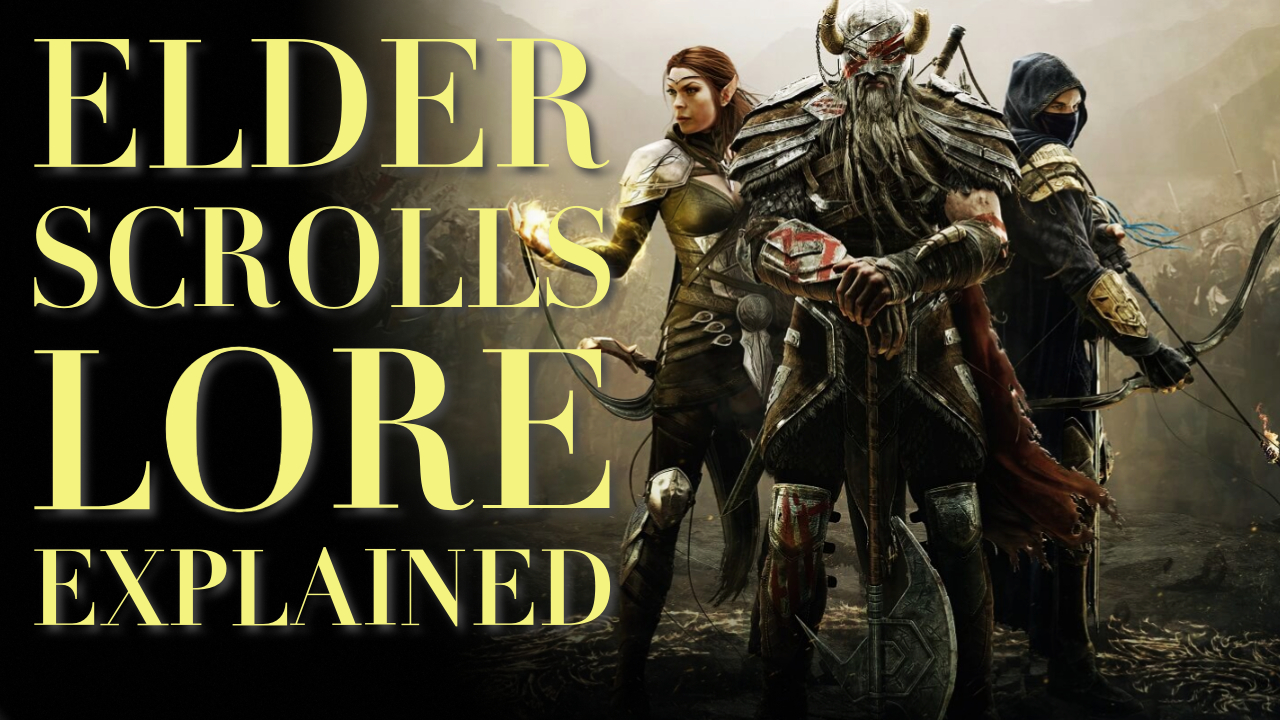
Elder Scrolls Lore: Everything You Need to Know
The world of The Elder Scrolls is vast and filled with layers of history, mythology, and arcane mysteries that stretch across millennia. From the frozen wilderness of Skyrim to the gleaming spires of the Altmer cities and the ancient, subterranean ruins of the long-lost Dwemer, Tamriel is a land of beauty and mystery. Tamirel is home to an array of cultures, each with its own customs, beliefs, and struggles, contributing to the rich and complex history that defines the series.
Beyond the video games, The Elder Scrolls franchise extends into a wide variety of media, including novels, comics, and lore books, enriching the world with deeper insights into the lives of its characters and the intricate world. Join us as we delve into the lore of The Elder Scrolls, exploring important characters, locations, and events that have shaped the series and cemented its place as one of the most beloved fantasy universes in gaming.
The Elder Scrolls Series Timeline
The timeline of The Elder Scrolls is as vast as the world itself, spanning thousands of years and countless events that define Tamriel and its people. The history of the series is divided into eras, with each game or story taking place at different points along the timeline. So far, the world has seen four eras, each with its own unique challenges and events. From the Third Era’s great wars to the Fourth Era’s struggles with dragons and political upheaval, the timeline of The Elder Scrolls is rich with tales of heroism, tragedy, and the unseen forces that shape the world’s fate.
The Third Era
The first game, The Elder Scrolls: Arena, takes place in the year 389 of the Third Era. It’s set in the Imperial City, where Jagar Tharn, a court sorcerer, betrays the Emperor, Uriel Septim VII. Uriel’s imprisonment sets the protagonists on their quest to find the pieces of the Staff of Chaos and free the Emperor. Though modest by today’s standards, Arena introduces the core mechanics that would define the series for years to come.
The second game, The Elder Scrolls II: Daggerfall, picks up sixteen years later, in the year 405 of the Third Era. Set in the region of Iliac Bay, between the provinces of High Rock and Hammerfell, the protagonist is called upon to help free the spirit of King Lysandus and uncover the mysteries surrounding the region. Daggerfall explores themes of betrayal, political intrigue, and ancient magic.
The Elder Scrolls III: Morrowind is set in the year 427 of the Third Era. Players take on the role of the Nerevarine, a prophesied hero destined to defeat the power-hungry Tribunal, a group of god-like rulers who have maintained control over Morrowind. Morrowind is deeply rooted in the ancient history of Tamriel and explores themes of religion, prophecy, and the dangers of unchecked power. The player’s journey reveals the dark secrets of the Tribunal’s rise to power and uncovers the ancient, ever-present threat of the Daedric Princes.
The Elder Scrolls IV: Oblivion is set in the year 433 of the Third Era, six years after the events of the last game. Uriel Septim VII, the same Emperor from Arena, meets an untimely end at the hands of Mehrunes Sagon’s forces, marking the beginning of the Oblivion Crisis. Before his assassination, Uriel Septim passes the Amulet of Kings to the player, as he believes they are crucial to the survival of the Empire. His death throws the Empire into chaos, with no direct heir to the throne. The protagonist must seek out the lost heir to the throne, Martin Septim, in order to prevent the complete collapse of the Empire.
The Fourth Era
Following the events of Oblivion, the world of Tamriel enters a new age: the Fourth Era. The most recent game in the series, Elder Scrolls V: Skyrim, takes place in the year 201 of this era. Set in the snowy, war-torn land of Skyrim, the player must stop the ancient dragon Alduin, foretold to be the World-Eater, from destroying the world. Skyrim is not only a personal tale of the Dragonborn, a hero with the power to speak the ancient language of dragons, but also a larger story about civil war and political unrest.
In addition to the main games, The Elder Scrolls timeline also includes tie-in books like The Elder Scrolls: The Infernal City and its sequel, Lord of Souls, which takes place between Oblivion and Skyrim. These novels introduce readers to the floating city of Umbriel, a mysterious, terrifying structure that has risen from the Sea of Ghosts. The protagonists in this duology must face down the city’s dangerous secrets and uncover a conspiracy that threatens to engulf the world in chaos.
Key Locations in The Elder Scrolls Series
The Elder Scrolls world is rich with iconic and significant locations, each contributing to the lore and atmosphere of Tamriel. From ancient cities and towering fortresses to mysterious ruins and natural wonders, these places are central to the stories, quests, and events that unfold throughout the series.
The Imperial City (Cyrodiil)
The Imperial City is the heart of the Empire, set in the province of Cyrodiil. Tamriel’s politics and culture are centered around this city, where Emperors have risen and fallen. The Imperial City is present in Arena and Oblivion. It’s central to the plot of the fourth game, where players must fight to close the Oblivion Gates that threaten to destroy the city.
Morrowind
The province of Morrowind is home to the Dark Elves (Dunmer), and its capital city, Vivec, is a legendary place of worship and politics. It’s the setting for The Elder Scrolls III: Morrowind, where players take on the Tribunal.
Skyrim
Skyrim, the northernmost province of Tamriel, is a land of rugged mountains, deep forests, and frozen tundras. It is home to the Nords, a proud warrior people with a deep connection to their ancestors and the gods. Elder Scrolls V: Skyrim takes place in this land, where civil war and dragons threaten the region.
Hammerfell
A desert land known for its harsh climate and nomadic cultures, Hammerfell is home to the Redguards, a fierce and proud warrior race. The province is filled with vast deserts, sun-baked cities, and pirate-infested waters. The Elder Scrolls games have featured Hammerfell’s northern borders, but the province as a whole remains somewhat unexplored compared to others.
High Rock
High Rock is a coastal region known for its rocky cliffs, dense forests, and bustling cities. It is home to the Bretons, a human race with both Elven and human heritage. The province is marked by political intrigue, with many competing noble houses fighting for power. The Elder Scrolls II: Daggerfall is set here, where players explore the Iliac Bay region between High Rock and Hammerfell.
The world of Tamriel doesn’t end there. There’s The Shivering Isles- featured in Oblivion– Sovngarde- the afterlife of the Nords features in Skyrim– and other places home to iconic races that have yet to be explored in mainline titles like the Black Marsh and Elsweyr.
Races in The Elder Scrolls
Tamriel also has a rich tapestry of races with unique cultures, traits, and history. These races, known as the “sentient races of Tamriel”, are integral to the world-building and lore of the series.
There are four human races that make their home in different parts of the continent. The Nords, who are native to Skyrim, are known for their muscular form and fair skin. They are hardy warriors who value strength, honor, and independence. The Imperials, who make their home in Cyrodiil, are characterized by their varied skin tones and hair colors. They are known for their diplomacy, discipline, and adaptability. Next are the Redguards from Hammerfell. They often have darker complexions and muscular builds. They’re fierce and skilled fighters with a strong martial tradition rooted in their history. Last, we have the Bretons who live in High Rock. While their appearances are mixed, their heritage is unique as they are descended from both humans and Elves. This gives them a natural affinity for magic and combat.
There are three Elven races in Tamriel: the Altmer (High Elves), the Bosmer (Wood Elves), and the Dunmer (Dark Elves). Their homes and appearance greatly reflect their names. The High Elves are tall with golden or light skin and live in the Summerset Isles. The Wood Elves are smaller, have greenish or brownish skin, and live in Valenwood. The Dark Elves, who live in Morrowind, have grayish skin, dark hair, and red eyes.
Tamriel has three other unique races: the Orcs, Argonians, and Khajiits. The Orcs look much like the traditional Orcs, with green skin, large builds, and tusks. They make their home in Orsinium. The Argonians, native to the Black Marsh, are known for their reptilian-like appearance and rough voices. They have scales, tails, and amphibious features. Then there are the natives of Elsweyr, the Khajiit, who are feline-like humanoids with fur-covered bodies, cat ears, and tails.
Important Characters in The Elder Scrolls
The Elder Scrolls: Arena
The Emperor, Uriel Septim VII, is one of the most renowned characters in the series, as he makes multiple appearances and is mentioned in nearly every game. He is the ruler of the Septim Empire, which oversees all of Tamriel, and his imprisonment is central to the first game’s story. His court sorcerer, Jagar Tharn, is the antagonist of the game. While he is not the most fleshed-out villain in the series, his role in the game is crucial in establishing the early Elder Scrolls narrative, and his use of powerful magic foreshadows the later conflicts with Daedric Princes and other magical forces.
The Elder Scrolls II: Daggerfall
King Lysandus is one of the central figures in the plot of Daggerfall. His mysterious death sets the stage for the game’s central conflict. His spirit haunts the city of Daggerfall, and the hero must investigate the circumstances surrounding his death.
There are also the Three Daedric Princes, Molag Bal, Boethiah, and Mephala. Each one seeks to manipulate events for their own goals, with the player character often being involved in their schemes. While not a central character to the game, longtime fans will recognize Cicero, a loyal follower of the Dark Brotherhood, who also makes an appearance in Skyrim.
The Elder Scrolls III: Morrowind
The third installment of the series expands upon its cast of characters drastically. The Nerevarine is the protagonist of the game, a prophesied reincarnation of Indoril Nervar, an ancient Dunmer hero. The Nerevarine must defeat Dagoth Ur, the story’s main antagonist, who is determined to conquer Tamriel by spreading the Corpus Disease. The three members of the Tribunal, Vivec, Almalexia, and Sotha Sil, also play a significant role in the third game. Each stands to oppose or influence the Nerevarine for their own gain.
The Elder Scrolls IV: Oblivion
The Champion of Cyrodiil, the protagonist of the game, must stop the Oblivion Crisis and find Uriel Septim VII’s heir. The Emperor makes a brief appearance at the beginning of the game, and his death sparks the start of the Oblivion Crisis, an event so large that the end of it also marks the end of an era.
To stop the crisis, the protagonist must find Uriel’s heir, Martin Septim. After the death of his father, Martin becomes the key figure in stopping the Oblivion Crisis, as he is the only person who can wear the Amulet of Kings and fulfill the prophecy to prevent Mehrunes Dagon’s invasion. Mehrunes Dagon is one of the Daedric Princes of Oblivion and the main antagonist of the Oblivion storyline. His forces invade Tamriel by opening massive Oblivion Gates throughout Cyrodiil. His goal is to destroy the mortal realm and reshape it in his own image of chaos and destruction.
The Elder Scrolls: The Infernal City and Lord of Souls
The Elder Scrolls: The Infernal City and Lord of Souls: An Elder Scrolls Novel’s two main protagonists are Annaïg and Attrebus. Annaïg is a young Breton girl and the daughter of a well-known scholar, while Attrebus is the Imperial heir and prince. Despite their vastly different backgrounds, they both have reasons to stop the Umbriel and team up to save the world.
The Elder Scrolls V: Skyrim
While all of The Elder Scrolls’ protagonists are nameless, the Dragonborn is the most iconic. They’re a prophesied hero with the ability to absorb the souls of dragons and use their powers through Shouts (the Thu’um). The central focus of Skyrim is the player’s quest to defeat Alduin, the World-Eater, who is prophesied to bring about the end of the world. Other important characters in the story are Ulfric Stormcloak, the leader of the Stormcloaks, a faction that seeks Skyrim’s independence from the Empire, and General Tullius, the leader of the Imperial forces in Skyrim.
The Elder Scrolls List of Books and Board Games
Disclosure: This post contains affiliate links, which means we may receive a commission at no cost to you. As an Amazon Associate, I earn from qualifying purchases.
The Elder Scrolls: The Infernal City
Lord of Souls: An Elder Scrolls Novel
The Elder Scrolls V: Skyrim – The Adventure Game | Dungeon Crawling Strategy Board Game
The Elder Scrolls:
The Official Cookbook