
Harry Potter and the Chamber of Secrets Complete Guide
The second installment in the Harry Potter film brings back nearly everything that made the first one a magical experience, including director Chris Columbus. His particular kid-friendly whimsical fantasy tone is well suited for the story at this point in time, with the main characters being 12-year-olds still enjoying their early days at Hogwarts.
And yet, J.K. Rowling starts to include darker elements like murders, mind control, and hints of Voldemort’s influence on Harry. This makes the film a bridge between the magical coming-of-age whimsy and the darker nature of the latter films. On all counts, the film delivers satisfyingly while preparing audiences for the dangerous path to come.
Disclosure: This post contains affiliate links, which means we may receive a commission at no cost to you. As an Amazon Associate, I earn from qualifying purchases.
The Story
Before entering his Year 2 in Hogwarts, Harry (Daniel Radcliffe) gets a surprise visit from a house-elf named Dobby, who tries to prevent him from returning to Hogwarts. When Dobby’s stunt gets Harry grounded by Uncle Vernon, Ron (Rupert Grint) and his brothers break him out of Privet Drive, where Harry finally gets to know The Weasleys better.
The strange occurrences around Harry continue when the portal to Platform 9 ¾ closes on him mysteriously. Once at Hogwarts, students from non-magical families start getting attacked by an unknown force, leaving ominous messages all over the place. With all that’s going on, Harry, Ron, and Hermione (Emma Watson) must navigate their schoolwork while solving the mystery that threatens to close their beloved school for good.
An Expansion of the World
It has the same tone with the same director as the first film returning. It focuses on depicting the kids’ school life – the lessons, the Quidditch match, the friendship hijinks – while balancing it with the dangerous, but ultimately harmless, mystery.
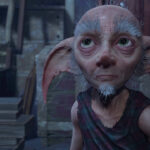
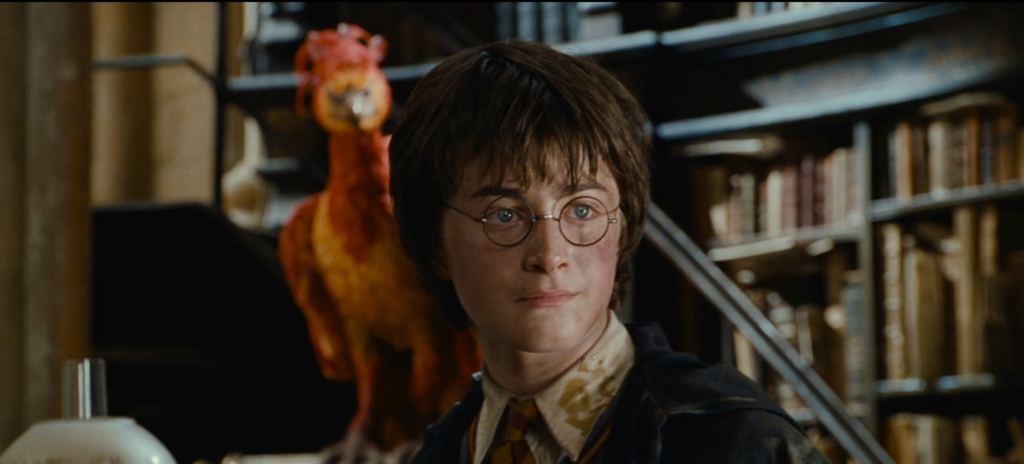
Enriching the Harry Potter world is the wide variety of magical menagerie appearing in this film. From Dobby, the house elf; Mandrake, the shrieking herb; Cornish Pixie, the basilisk, to the phoenix, the presence of these creatures truly elevates the enchanting quotient of the film. Seeing these creatures, many crafted with practical effects, interact with our characters makes the world feel more immersive. The scene of Harry watching Fawkes, the phoenix, rise from its ashes for the first time and later get healed by its tears wouldn’t be as powerful had he been interacting with special effects. Likewise, the iconic Mandrake harvesting in the Herbology class feels all the more fascinating and grossly hilarious thanks to its realism. Kudos to the team for choosing tangible craftsmanship over CGI; these creatures still hold up to this day, even compared to recent releases.
Harry Potter and the Chamber of Secrets: Wicked This Way Comes
Though subtle, the film also starts hinting at the darker nature of the Wizarding World that would define the latter installments. The film’s central conflict revolves around a mysterious entity known as the heir of Slytherin, who targets students with Muggle blood to “purify” Hogwarts. Throughout the movie, Harry, Ron, and Hermione investigate who could be this so-called heir and how to locate the fabled Chamber of Secrets, which is said to unleash evil on the entire school if opened. Along the way, the school’s dark history is revealed – one that involves actual murder and unimaginable terror.
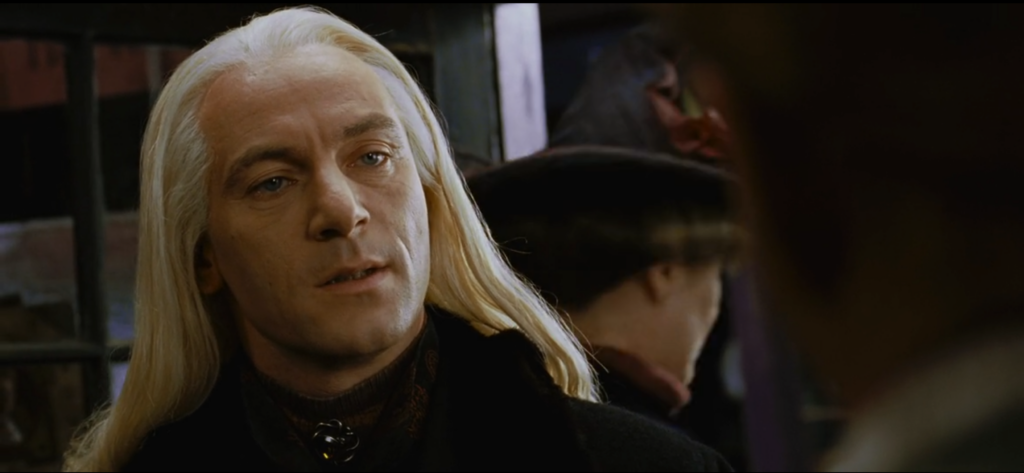
But what’s more interesting here is the inclusion of the genuine threat of bigotry and discrimination in the Wizarding World. This theme percolates through every aspect of the movie. Draco Malfoy (Tom Felton) and his father, Lucius (Jason Isaac), are the main culprits here. Coming from a notoriously exclusionary Pureblood family, the Malfoys look down on everyone without a drop of magical blood, like Hermione. Obviously, she becomes the main target of Malfoy’s harassment by being called the derogatory word “Mudblood.”
The idea of purity in the Wizarding community is front and center. There is a lot of discussion about Purebloods and Mudbloods. Professor McGonagall (Dame Maggie Smith) speaks of the lore of Salazar Slytherin, who believed only Pureblood wizards are entitled to magical learning that he created the Chamber of Secrets to contain an entity to wipe out “non-pure” wizards. But that’s not the only manifestation of the discrimination theme.
Fifty years prior, the Chamber of Secrets was opened by none other than young Voldemort himself, who still went by his birth name: Tom Marvolo Riddle (Christian Coulson). However, he got away with it by framing Hagrid (Robbie Coltrane) for the crime, resulting in the death of a student who would become the toilet-haunting ghost Moaning Myrtle. There is something more sinister here about Hagrid being the one set up. The film didn’t delve into it much, but the book made it clear that Hagrid’s half-giant ancestry and menacing facade make him the easy target. After all, he looks and behaves in a scary way, which must mean he’s capable of evil, right? It’s the same train of thought as the Pureblood purists and their fearmongering idea.
(Sidenote: because of the whole expulsion angle, the ending where Hagrid is being welcomed back with applause at the Great Hall feels all the more meaningful. Fifty years ago, he was expelled for a false accusation. Now he’s welcomed back with the reverence he deserves)
Also, let’s not forget that Dobby is essentially a slave to the Malfoys. Lucius treats him horribly but cannot do anything because he is “owned” by the family. Once again, we see the existence of a toxic social hierarchy being highlighted in The Wizarding World, and this is only going to get more prominent as the series continues.
All of this will play an essential part in shaping arch-villain Voldemort’s motivation and what he stands for in his crusade.
Harry Potter and the Chamber of Secrets is the backstory for Voldemort
There is a memorable scene in the movie in which Tom Riddle reveals to Harry an anagram of his name, “I Am Lord Voldemort.”
Like the first movie, the film ultimately traces back to his attempt to return to power. The enchanted diary is actually a piece of Voldemort’s soul trapped in the diary. We don’t know it yet at this point, but later, we find out that it’s one of the seven Horcruxes Voldemort had made to preserve his immortality.
The film’s focus on magical blood is a precursor to Lord Voldemort’s core philosophy about “pureblood supremacy,” despite him being a half-blood himself. That exceptionalism ideology is used to gather followers and wage war against everything but the radical Purebloods, including wizards who side with magical diversity, Muggles, and other magical races. Not so different from our world politics, huh? It also shows a lot of his qualities from a very young age: exceptionally gifted but cunning and cold-blooded.
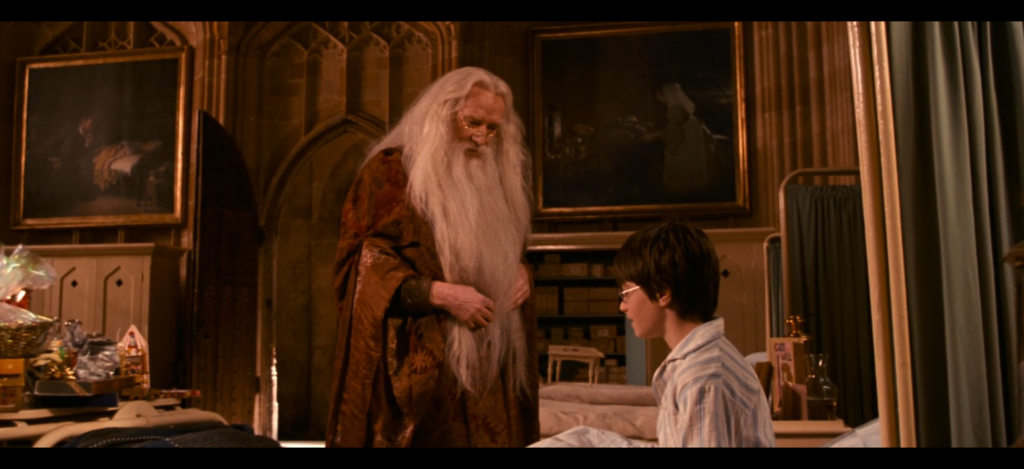
The film also starts dropping hints about Voldemort’s similarities with Harry. Harry’s Parseltongue ability is most apparent, which foreshadows the strange connection they would have over the course of the series. At the end of the movie, a conversation between Dumbledore and Harry Potter reveals the truth about what happened the night Voldemort killed Harry’s parents. In the process of trying to kill him, Dumbledore tells Harry Potter that Voldemort has transferred some of his power and traits to him. Harry is troubled by the possibility of being evil like his parents’ murderer but is consoled when Dumbledore tells him this crucial piece of advice:
“It is not our abilities that show what we truly are, it is our choices.”
Ultimately, although they both share similar traits and immense potential, what sets them apart is their choices. Choice would become a recurring theme in Harry Potter lore’s grand scheme of things.
Indeed, how JK Rowling pieces clues about future books needs to be studied. And thankfully, the film is able to weave these subtle ideas around the fancy worldbuilding.
In The Sorcerer’s Stone, Harry Potter can talk to the python in the zoo. We thought it was just a random part of his magical gift, but it turns out to hold more meaning in the second story: the ability is revealed to be a Parseltongue, a dangerous and scarce ability possessed by nefarious figures like Slytherin and Voldemort.
There are also smaller examples. After the incident at the beginning of the film, the Weasleys’ flying car wanders off into the Forbidden Forest but comes back to rescue Harry and Ron from Aragog’s army later on. The Mandrake in the Herbology class turns out to be the cure for the petrification problem facing Hogwarts. These are little details you might miss, but their presence makes a whole lot of difference in the story.
Still, there are times when this is not the case, and the story introduces random plot devices to steer the plot forward. This Deus ex Machina problem jumps out several times. The first film had the Erised Mirror leaving Harry Potter the Sorcerer’s Stone in his pocket when the mirror’s sole function previously was to reflect what someone desires the most – emphasis on reflection. This one has the Sword of Gryffindor appearing in the Sorting Hat exactly the moment Harry needs a weapon. There is barely a setup for this to happen. Thankfully, this is a kid’s film, which allows for some simplification of logic to occur. Plus, it comes with a charming message, so you can pretty much brush it off.
Some of those wrinkles aside, the film does a great job transitioning the tone of the franchise from the full-on kid fantasy first film to the much darker Harry Potter and the Prisoner of Azkaban, which appropriately changed hands from Columbus to director Alfonso Cuaron’s more grimdark take. It continually expands the canvas of the Wizarding World’s wondrous realm while leaving just enough hints for the weightier themes to come.